

Turnkey EAC Certification
For the EAEU Market

How to Obtain Certification in the EAEU
An EAC certificate is not just a “tick-box document”. For most product categories, an EAC document is the legal basis for the lawful import and sale of products in the EAEU countries (Kazakhstan, Kyrgyzstan, Armenia, Russia and Belarus). If the document is missing, or if it has been issued formally but with errors, the consequences are usually the same: border delays, a sales ban, questions from supervisory authorities, fines, and the need to redo everything “on the fly”.
We help companies confirm the conformity of products with the requirements of the technical regulations of the Customs Union (EAEU). In practice, this means quickly understanding which rules apply, determining the correct type of document, organizing testing, and issuing the document so that it actually works in real scenarios – during import, inspections, and sales.

A particular focus is on European companies entering the EAEU market. European logic (CE and directives/regulations) cannot be transferred here directly: the EAEU has its own technical regulations, registers, and roles (manufacturer, applicant, authorized person). We structure the process so that it is clear, transparent, and predictable for you – in terms of timing, steps, and responsibilities
What EAEU (EAC) Certification Is and Why It Is Necessary
The EAEU (Eurasian Economic Union) operates on the principle of a single market: for many goods, common safety requirements and unified conformity assessment procedures apply. These requirements are set out in the technical regulations (TR CU / TR EAEU). If a product falls under a regulation, conformity assessment becomes a mandatory condition for placing the product on the market.
Why this matters specifically for European manufacturers and importers:
- The regulation differs from the European model. In the EU, the familiar logic is conformity assessment and CE marking within the framework of directives and regulations. In the EAEU, its own system of regulations, registers, and roles applies (applicant, manufacturer, authorized representative).
- An authorized representative is often required. If the manufacturer has no legal presence in the EAEU countries, the documents are usually registered to a resident company (authorized representative / applicant). We help organize this issue – because without it the procedure cannot “start”.
- Mistakes are costly. The most unpleasant situation is when a document “seems to exist”, but during an inspection it turns out that the wrong form of conformity assessment was chosen, the wrong scheme was selected, the wrong testing standards were used, or the technical documentation was prepared incorrectly. For business, this means delays, rework, and loss of time on the market.

Our Services


TR CU 032/2013
Pressure equipment
Learn More

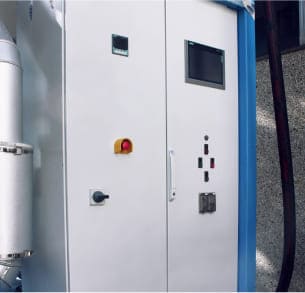
TR CU 032/2013
Pressure equipment
Learn More
Legal Framework and Key Technical Regulations TR CU / TR EAEU
The technical regulations of the EAEU establish the basic product safety requirements and determine exactly how conformity is confirmed: through a certificate or a declaration, under which scheme, and with what evidence.
In practice, the key difficulty is not “issuing a document”, but correctly building the evidentiary basis for a specific product and shipment: properly describing the product and its intended use, determining the applicable regulations, selecting the scheme, organizing testing, and aligning the technical documentation. This is exactly the work we take on – so that you complete the procedure successfully on the first attempt.
Types of Conformity Assessment: EAEU Certificate and Declaration
In practice, clients most often come with a simple question: “We need an EAC certificate.” But the correct question is different: what form of conformity assessment is required for a specific product under a specific regulation.
EAEU Certificate of Conformity (EAC Certificate)
The certificate is issued through an accredited certification body. Depending on the scheme, it may include:
- sample testing;
- production analysis (if required);
- inspection control (for certain schemes/categories).
A certificate is a more demanding procedure than a declaration, and it is applied where the regulation requires enhanced control.

EAEU Declaration of Conformity (EAC Declaration)
The declaration is registered on behalf of the applicant. It is important to understand: the applicant bears responsibility for the information in the declaration. Therefore, the key risk here is not the “speed of registration”, but the correctness of the basis: testing, standards, supporting documentation, and the technical file.
Mandatory and Voluntary Certification
For entering the EAEU market, we are primarily interested in the mandatory form of conformity assessment. Voluntary documents may be useful for marketing or tenders, but they do not replace the mandatory requirements of the regulations.
How to Understand What Exactly You Need
We start with diagnostics – a short stage that removes uncertainty and saves time. At this stage, we clarify: what kind of product it is (intended use, modifications, completeness), which regulations apply, what you already have in terms of documentation and testing, how supplies are arranged (batch or serial production), and whether an applicant/authorized person is required in the EAEU.
After diagnostics, it becomes clear:
This is the point at which the client gets a “project map”: transparent logic and clear next steps.
EAEU Certification Process
-
Product Analysis
We review the intended use, design, and scope of supply. We determine whether the product falls under TR CU/TR EAEU and, if so, which ones. -
Scheme Selection
The scheme depends on the batch/series, the type of product, and the requirements of the regulation. The scheme determines the timing, testing, and subsequent obligations. -
Document Preparation
We review the technical documentation, instructions, and marking. If necessary, we revise them – this often saves time and reduces the risk of refusal. -
Testing and Assessment
We organize testing in partner laboratories and coordinate the entire process of obtaining test reports. -
Issuance and Registration
We prepare the certificate/declaration and register the document in the prescribed manner so that it is valid and verifiable.
Cost and Timing of EAEU Certification: What Affects the Price
We do not work with a “universal price list” because projects really differ: from standard low-voltage equipment to complex lines and machines with a combination of regulations. We calculate the cost as a fixed project fee, aiming to provide the final figure as quickly as possible after the initial analysis.
What Determines the Cost
The cost usually includes:
- work on determining the requirements and the scheme;
- preparation/review of technical documentation;
- testing (its scope depends on the product and the regulations);
- work of the certification body (if a certificate is issued);
- inspection control (if provided for by the scheme);
- organizational issues (including a representative – when one is needed).
What Timeframes Are Typical in Practice
The timeframe depends on:
- the readiness of the technical documentation package;
- the complexity and number of regulations;
- the scope of testing and the laboratory’s workload;
- the need for a representative.

To be honest: “in one day” only things that have already been prepared in advance and do not require real procedures can be done. Our task is to speed up the process where possible, without creating legal weak points, which may later “surface” during an inspection.
Why European Companies Find It More Convenient to Work with Us
We structure the work the way European clients expect: clearly, in a structured, professional way and without unnecessary “magic”.
What Clients Particularly Value:
- the speed of response and project progress;
- the correctness of document preparation;
- confidence that the correct type of document has been selected;
- testing conducted to the required standards.
Another important point: we do not focus on a “personal brand” or the demonstration of “our own laboratory”. We work as a system of expertise and partnerships, bringing in the right competencies for the task.
SITIX in figures
10+
years in certification
100+
completed projects
15+
partner countries
80%
returning clients
Guarantees, Responsibility, and Transparency
We honestly describe the boundaries of responsibility:
- the client is responsible for the accuracy of the initial product information (description, configuration, features);
- we are responsible for organizing the procedure and bringing the project to a result if we take it on.
If we see a risk of delay, we say so immediately and explain the reasons.
If we understand that it is impossible to guarantee the result, we do not promise the impossible and may refuse the project.
Frequently Asked Questions About EAEU Certification


Is my product subject to EAEU certification?
What is needed – a certificate or a declaration?
Can EAC be issued without a company in the EAEU?
Which documents need to be prepared?
Where is testing carried out?
How long does the procedure take?
Can the process be accelerated?
What if another consultant has already done “the wrong thing”?
Do you work with European companies?
We will analyze
the project and present an action plan